“Testing” In Training For Endurance Athletes: What, When & Why
Why wait until race day to see how your training has progressed? There’s a better way: use “testing” throughout your training. Here’s how.
One of the most nerve-wracking aspects of race day is wondering “have I done enough?”. With endurance sport, it’s practically impossible to do the distance in training. That’s why the majority of marathon runners max out at around 21 or 22 miles for a long run, and Ironman competitors rarely bike the complete distance.
But there’s one method you can use during training that will give you confidence on race day - Testing. Testing is good because:
- You build a series of great baseline numbers to work from. No guesswork involved. Just real, personal data.
- Test sessions can be built into training as a specific tool, used every 6-8 weeks, to mark the end of a training block.
- It gives you invaluable data to assess your training progress (and plenty of time to tweak your training before race day).
- Athletes take a lot of confidence from testing, which takes the pressure off as the race approaches.
5 Ways Endurance Athletes Can Test Training Progress
1. CSS Test (Swimming)- Swimmers should do some kind of threshold testing during training, since it’s difficult to accurately replicate open-water swim distances and environments. Work on your threshold and be confident that your race-day pace and endurance will benefit. I like CSS sessions to test swimmers’ lactate threshold. Critical Swim Speed sessions can be very tough, so schedule them in every 6 or 8 weeks. You’ll need a stopwatch, because every second counts.
- Warm up and do a short build set to make sure you’re warm but not tired.
- Swim 1 x 400m time trial and record the time. If possible, take your 100m splits (they should be as similar as possible).
- Recover fully (there’s no set recovery time).
- Swim 1 x 200m time trial and record the time.
Use a calculator like http://www.swimsmooth.com/training.html to work out your CSS/threshold speed. You can now use your current CSS pace-per-100m to push your training over longer swims and intervals. Track your CSS every time you test and remember that, in swimming, even an improvement of a few seconds is great progress.
2. CP20 (Cycling) - You can also calculate threshold numbers on the bike and use the data for longer training sessions. Functional threshold power is defined as the maximum power you can sustain over a 1-hour ride, but testing over 60 minutes is too much for training (for most people!). One method is CP20 - a “Critical Power” 20-minute time trial which is pretty brutal, but less demanding than a full 60 minutes. You’ll need a bike with a power meter, because what we’re testing here is wattage.
- Warm up (various protocols for the warm up)
- Then ride as hard as you can (sustainably) for 20 minutes.
- Record average power (watts) and average heart rate.
- Your CP20 number is the highest average power you can maintain for the 20-minute test ride.
From your CP20 number, it’s simple to calculate a relatively accurate FTP (full threshold power) number: multiple it by 95%. And now you have your current CP20 and projected FTP numbers, you can calculate training pace for different distances, and project optimal power output and finish times for races.
Be conservative about how frequently you do CP20 testing during training. It’s a short session but pretty demanding.
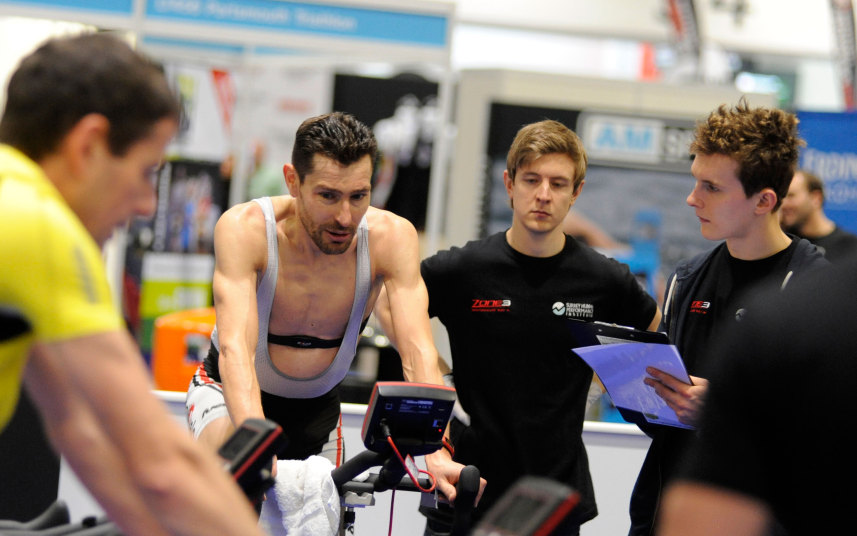
3. RAMP Testing (Cycling) - If you have access to an ergometer, you can add RAMP training to your training. During a RAMP test, you’ll be working aerobically throughout, reaching your aerobic system’s max capacity by the end of the session. So RAMP shows us our MAP (Maximal Aerobic Power).
- Warm up (various protocols for the warm up)
- Pedal at predetermined wattage (a relatively easy pace for most people), and increase the wattage by 25 watts every minute (for men) or 15 watts every minute (for women). Increase until failure (the point at which you can’t increase power any more).
RAMP testing is deceptive. It will probably feel pretty easy at first but will suddenly feel very demanding. Be honest about your failure level (don’t cheat yourself) and push yourself to exhaustion. With your RAMP number, you can calculate your approximate V02 Max and your Maximum Aerobic Power. Use this number to set training zones.
Although RAMP testing is very demanding, it’s something I think you can repeat every 4-6 weeks because it’s a relatively short test, and will feel easier as you get fitter.
4. Mile Repeats (Running) - Mile repeats are a simple way for any runner to measure progress. Ideally, you’ll have access to a running track, but mile repeats can be carried out on a treadmill or out on the road. Just make sure you measure a mile route, and use the exact same route every time.
How many mile repeats you do will depend on your existing fitness, and your race goal. If you are training for a shorter triathlon, or a 5K running race, you might choose to just do a single mile repeat. Record this data, use it to set training run goals, and to predict race finish times. If your race is longer, or you have a good level of running fitness, do 3, 4 or more mile repeats (but be aware that this is likely to feel demanding, and will need a lot of recovery).
5. Parkrun 5Ks (Running) - What a fantastic resource we have in the Parkrun series! Use your local Parkrun event as a regular testing session. At 5K long, the events are ideal for all triathletes. And because they are always run over the same route, they give you accurate and replicable data. The only variables will be weather, temperature, wind and yourself. I wouldn’t advise doing Parkrun every week, mainly because your weekend sessions will probably be set aside for longer training. Every 4-6 weeks would be great.
The tests mentioned above are just an example of some of the tests available; some of them may be more applicable to you than others, just make sure you choose a form of testing that’s repeatable and replicable, so the only change in data every time is you! Log everything - not just your pace and time, but how you felt, levels of stress, and how you recover.
What forms of testing do you use throughout longer training blocks?