Fix your triathlon race day problems with these smart solutions
Don’t let stress ruin your race experience. Be confident with quick fixes for your race day problems.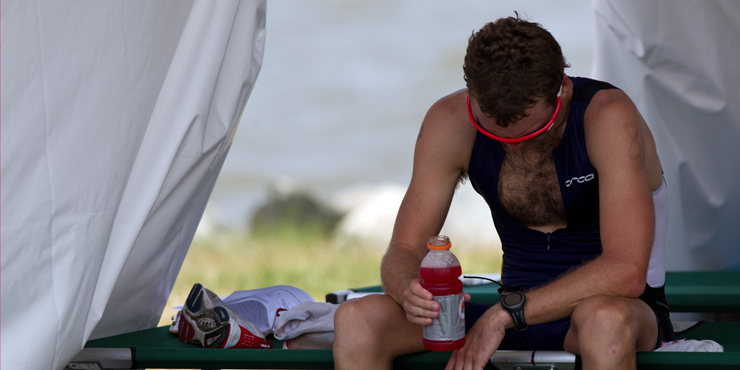
Doing a triathlon of any distance is challenging enough. You’re already asking a lot of your body and physical fitness, however you need to train your mental fitness, too. I coach clients to identify and trouble-shoot problems. Here’s how to stop doubt, stress, and overwhelm from crowding your mind - even when you’re exhausted!
- Focus: During the race, focus on the present moment. This will avoid overwhelm. Think about how to fix the problem here and now. Don’t worry about how it might affect the rest of your race, or your time.
- Small steps: If you start to feel low during a race, break it down into smaller goals. Miles, 5-minute chunks, sections of the course. Don’t think about the entire race as one challenge. Tick off small goals as you get through them.
- React: “Expect the best but prepare for the worst.” Don’t go looking for problems, or focusing on what could go wrong. But be prepared for every eventuality! Knowing that you’ve planned for problems (and practised your response) will give you confidence.
The Problem: You lose your goggles in the swim
Goggles can get knocked off by other swimmers, or by waves. This could send you into a panic. Here's what I advise clients:
Can you stop? (This will depend on how crowded the pack is, how far you have left to swim, and whether you think finishing the swim with no goggles will be the faster option). Have a look for your goggles. If you don’t find them within a few seconds, it’s time to move on. If you need to swim without goggles, mentally scan your personal situation. Are you wearing contact lenses? If so, you’ll need to close your eyes every time your face is in the water, and open them, (or just one!) to breathe and sight. Calm your mind, don’t let panic set in, and make your main aim “getting through this swim”.
The Problem: You lose sight of your bike in T1
In big transition areas, you might choose to leave something visible on or near your bike (some races don't allow this). It might not be there: someone could have removed it, or it could have fallen or blown away.
The solution: make sure you know where your bike is before you line up for the swim. Physically walk or run through transition from “swim in” to your bike. Count the rows. Don’t rely on it being “next to the fancy Pinarello with a disk wheel”. The Pinarello rider might already be out on the bike course.
The Problem: Mechanical problems during the bike leg
There’s nothing more frustrating and stressful than a dropped chain or multiple punctures. Preparation is key.
Make sure you know how to fix the majority of bike problems long before the race. Practice changing inner tubes, getting tyres off the rim, taking your wheel on and off. Have all the tools you’ll need with you on the bike. If it does happen during the race, stay calm. Shaking hands will make the task more difficult. Steady your breathing, focus on what you need to do, and try not to look at other riders passing you. When you’re back on your bike, start in a low gear and get going calmly. Don’t go mad trying to catch up. Chances are you haven’t lost as much time as you think.
The Problem: You drop a water bottle or gel during the bike or run
During longer races, or on warmer days, dropped fuel can mess with your mind. Here’s how to cope.
Maintain a flexible mindset. That specific drink, gel, or bar has gone. You need to move on and respond to the situation. What are your options now? If the race is long, there will be aid stations on the course. Do you know what brand of nutrition they’re offering? Will it work for your body, or do you need to avoid it? If all else fails, fill your bottles with water at aid stations and get back on track with your own strategy in T2. (I always recommend clients find out what brand of drinks will be at aid stations and try them during training).
The Problem: Muscle cramps
Cramps in your legs (or anywhere else!) can be debilitating during a race. Understanding why they happen can help you deal with them better.
- muscle fatigue (this could be down to your posture on the bike, or to more often, misjudged pacing)
- lack of electrolytes and minerals (more likely to happen on hot days, or if you drop your water bottle)
To combat this ensure you pace your race correctly. If cramp occurs, slow down and stretch the elected area. You can also try packing a few electrolyte tablets, or gels with electrolytes, in your bike pocket or in the transition area. The tablets can be added to water to turn the situation around quickly.
The Problem: Stomach issues
GI issues can be a real problem, especially during the run. If this happens to you, try not to get stressed as this can actually make bad stomachs worse. It could be because:
- you went out too fast
- you haven’t refuelled and rehydrated properly during the bike (too much, too little, or not often enough)
- you have misjudged your pace
- it’s hotter or more humid than you anticipated
If you have stomach problems during a race, focus on hydration and electrolyte balance. Your stomach may be unable to properly absorb calories, carbohydrates, and water right now. If the race is short, you could push through and focus on post-race recovery hydration and nutrition. If it’s a longer race, try using a low-carbohydrate hydration option for 20 minutes. If your stomach is in a bad way but you don’t want to DNF, you might need to be sick (sorry!) and reset your hydration strategy.